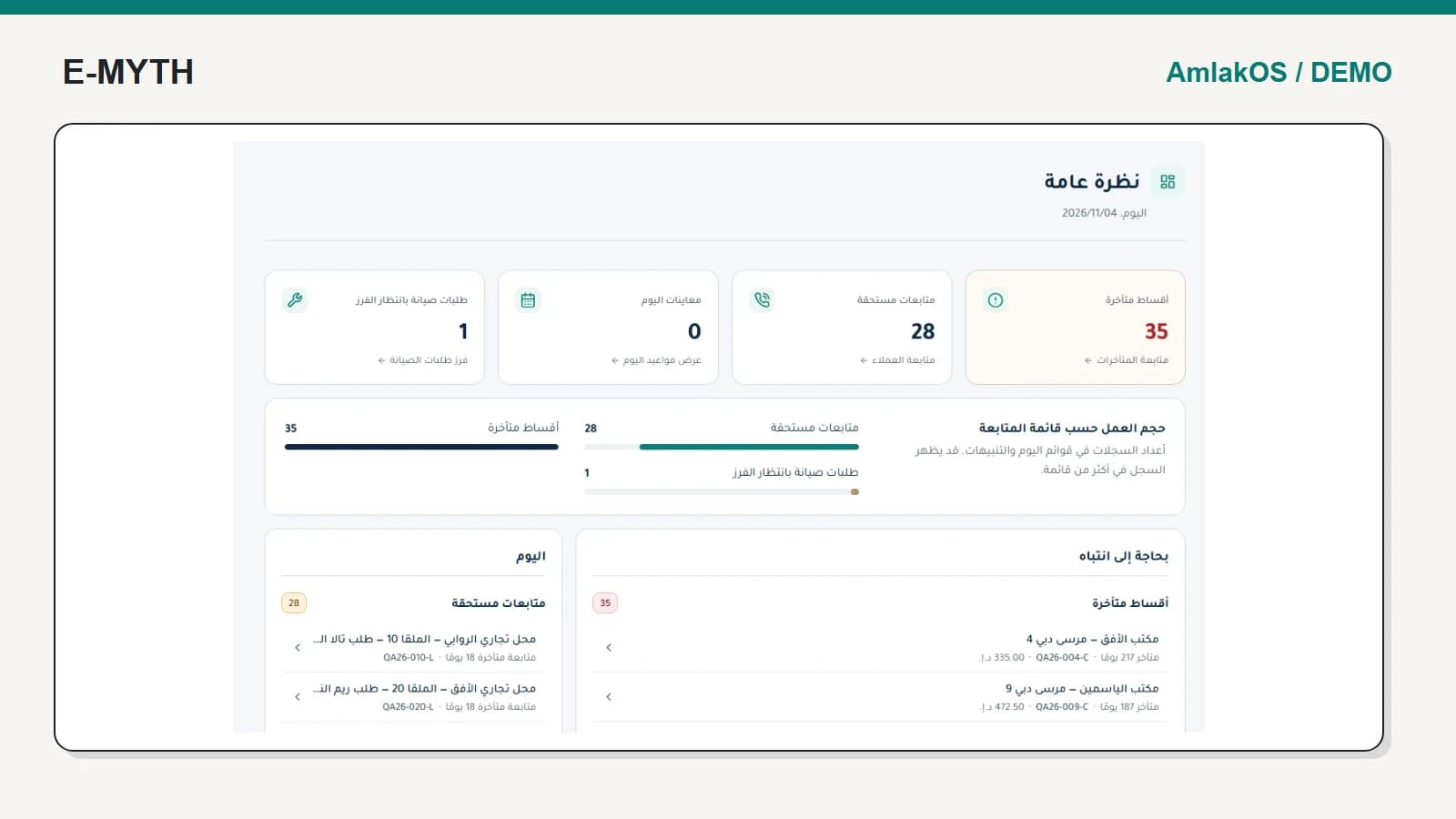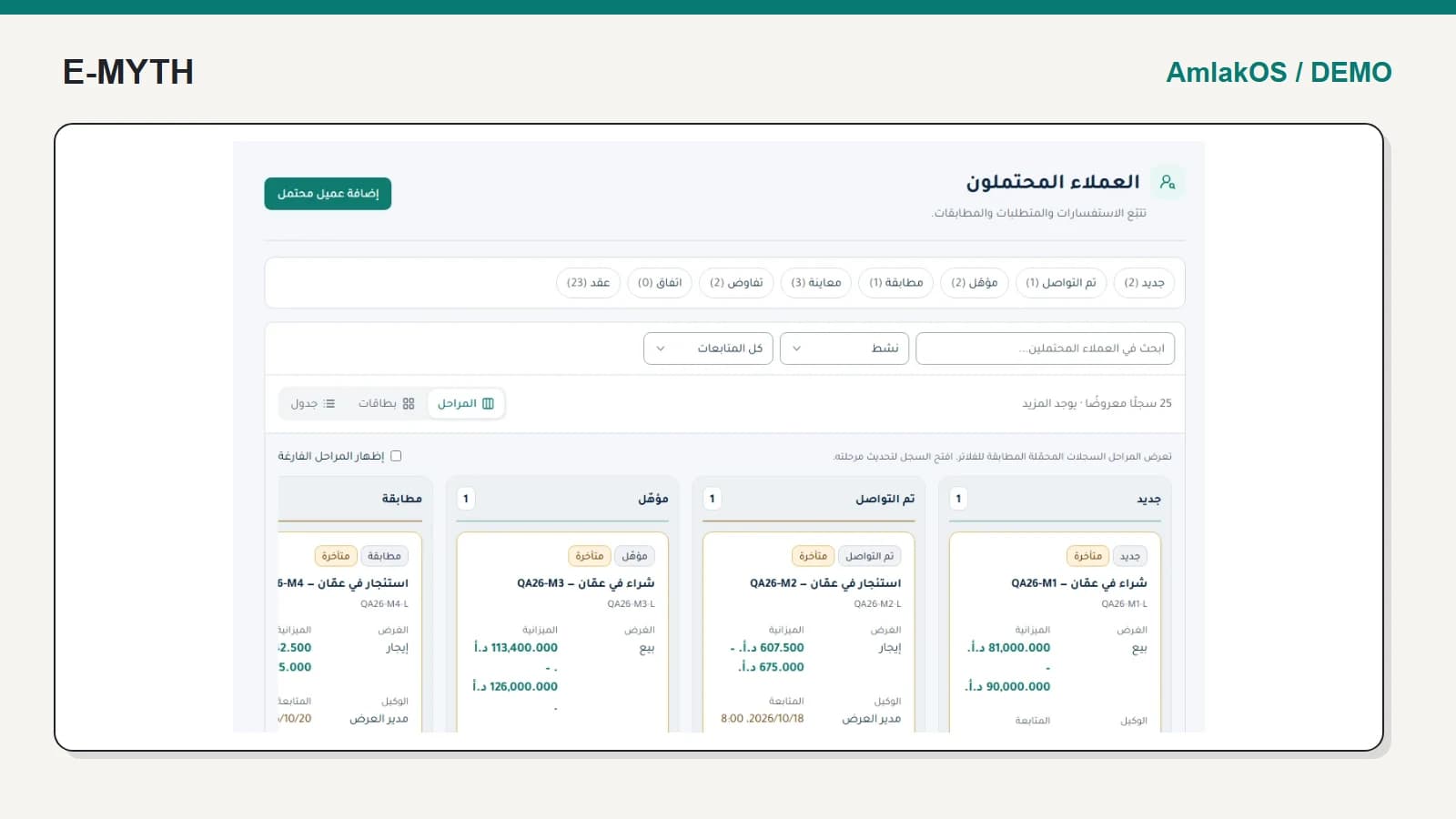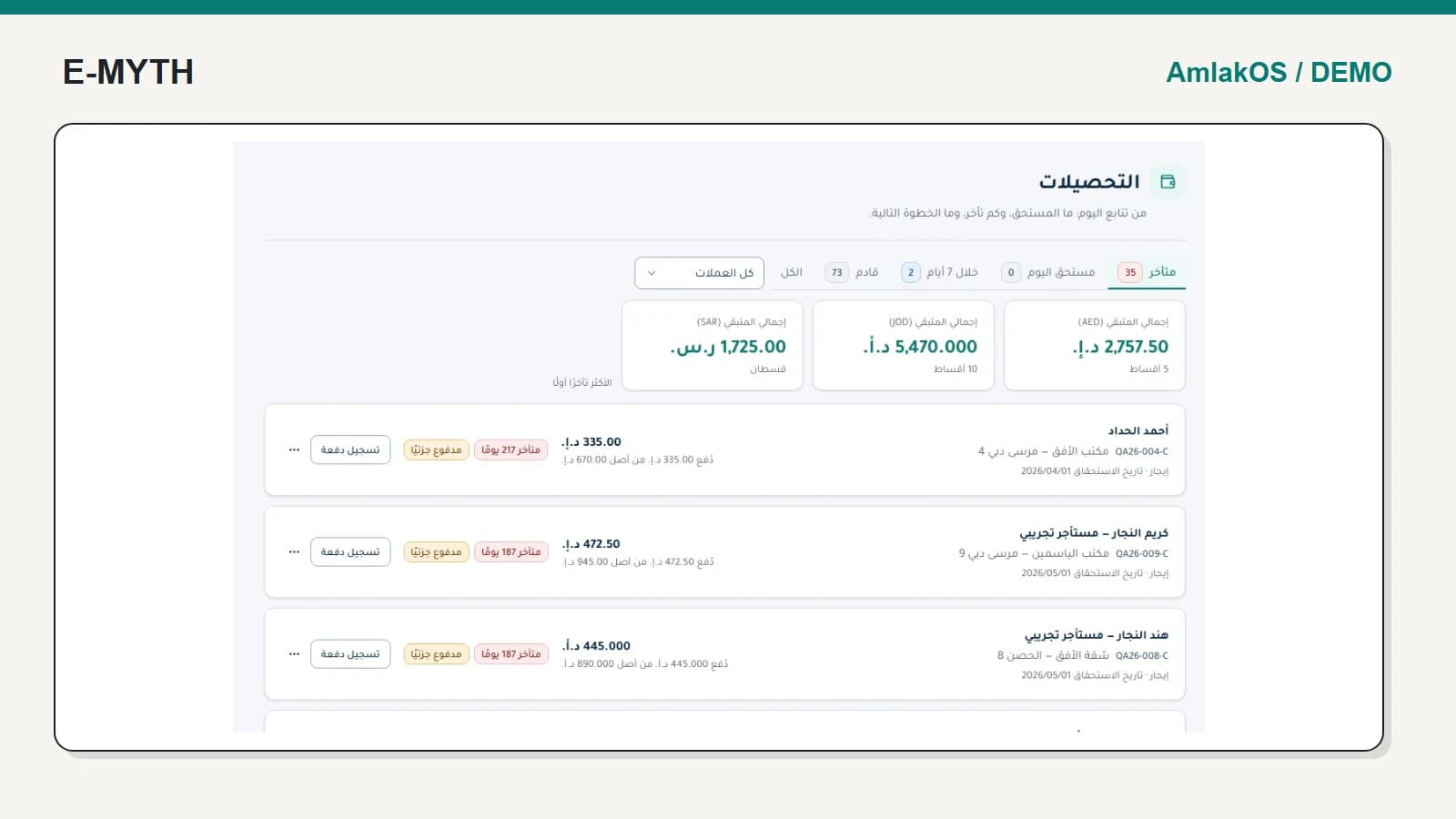

An automated reminder is useful when it follows the current obligation and stops being appropriate when that obligation changes. Sending more messages is not the goal. The goal is a clear event, intended recipient, relevant content and a result the team can inspect.
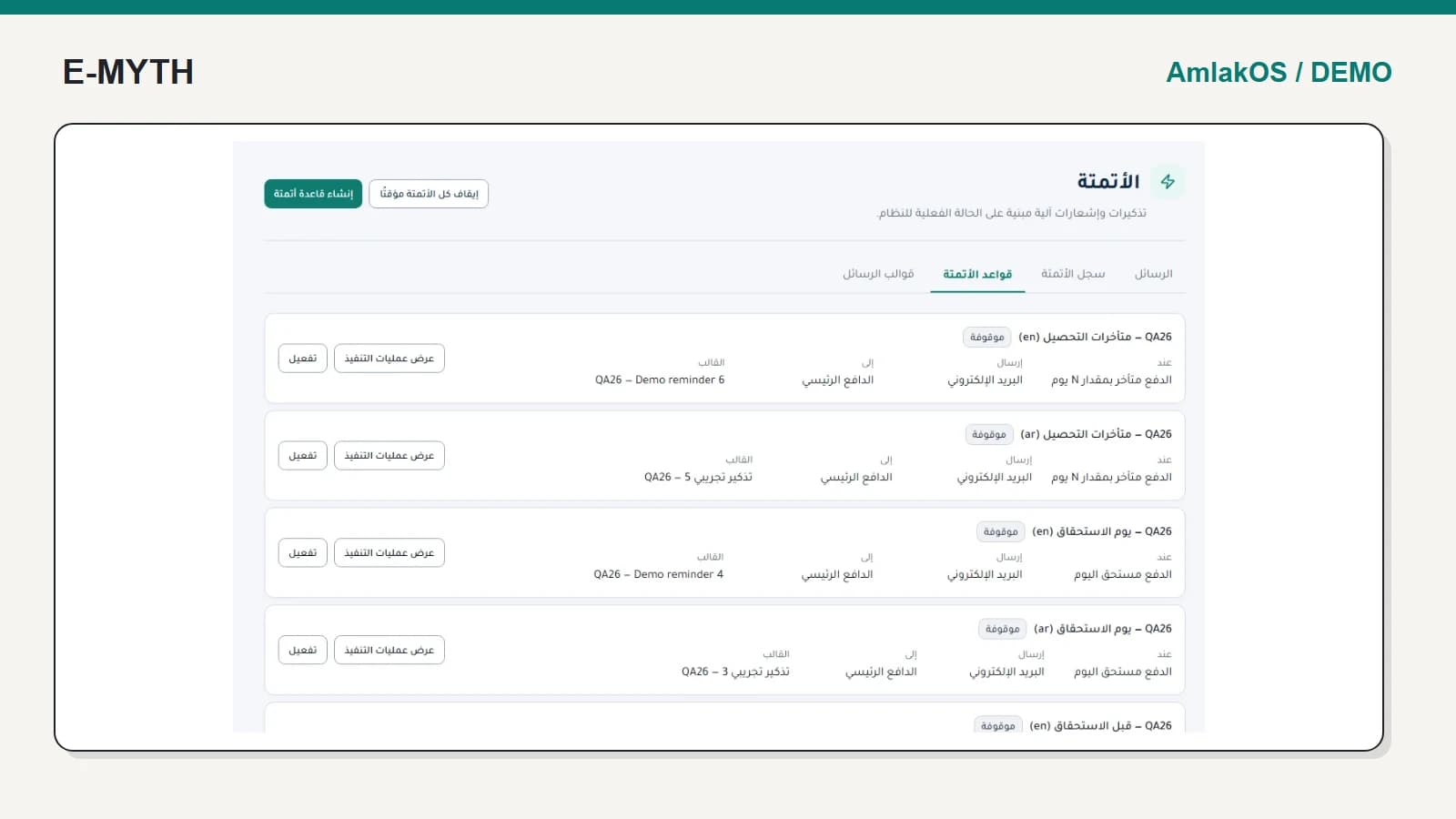
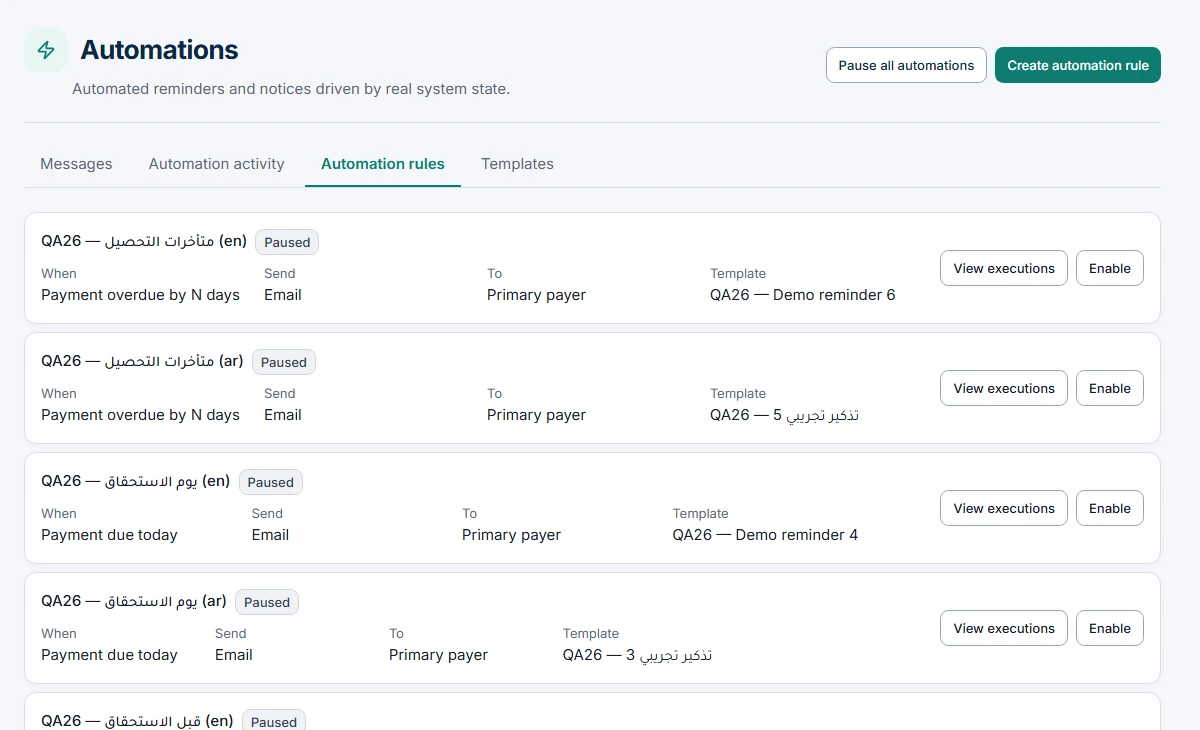
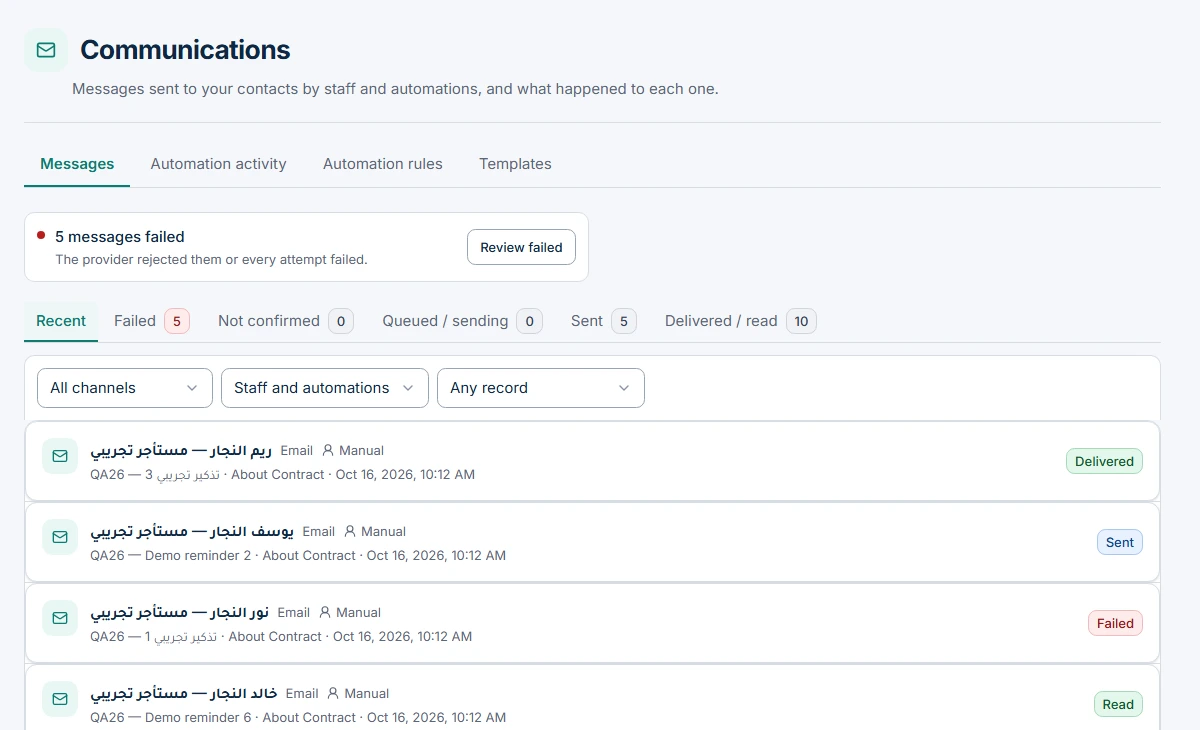
The following AmlakOS screens are local demo data. Automation rules are paused, and the communication history contains seeded simulated outcomes. We did not send external messages or verify live providers during this walkthrough.
Define the trigger before writing the message
Payment due soon, payment due today and payment overdue are different events. Choose the responsible recipient, language and template for each. A reminder sent to the wrong contact at the wrong stage is an operational error even if the provider delivers it successfully.
 View the full-size screen ↗
Review suppression and duplicate handling with the team. Ask what should happen after a payment, a corrected due date or a cancelled agreement. Test changes in the underlying record, not just a manually triggered sample message.
Follow the message into its delivery history
The communication workspace distinguishes failed, sent, delivered and read states. These labels answer different questions. “Sent” is not the same as “delivered,” and neither proves that the recipient understood or acted on the message.
 View the full-size screen ↗
For live acceptance, require the provider response, relevant event callbacks and the retry or escalation path. A failure should leave an actionable record for staff. It should not disappear behind a green notification saying that a message was merely created.
Keep the operational record as the source of truth
The collection queue should still show an outstanding obligation if a reminder fails. A maintenance work order should still need an outcome if a technician notification was sent. Messages assist a workflow; they do not replace its states.
Define who can create templates, change rules, inspect contact details and retry messages. Include contact preferences and consent requirements relevant to your use rather than assuming every stored phone number is eligible for every channel.
An integration screen should disclose missing setup
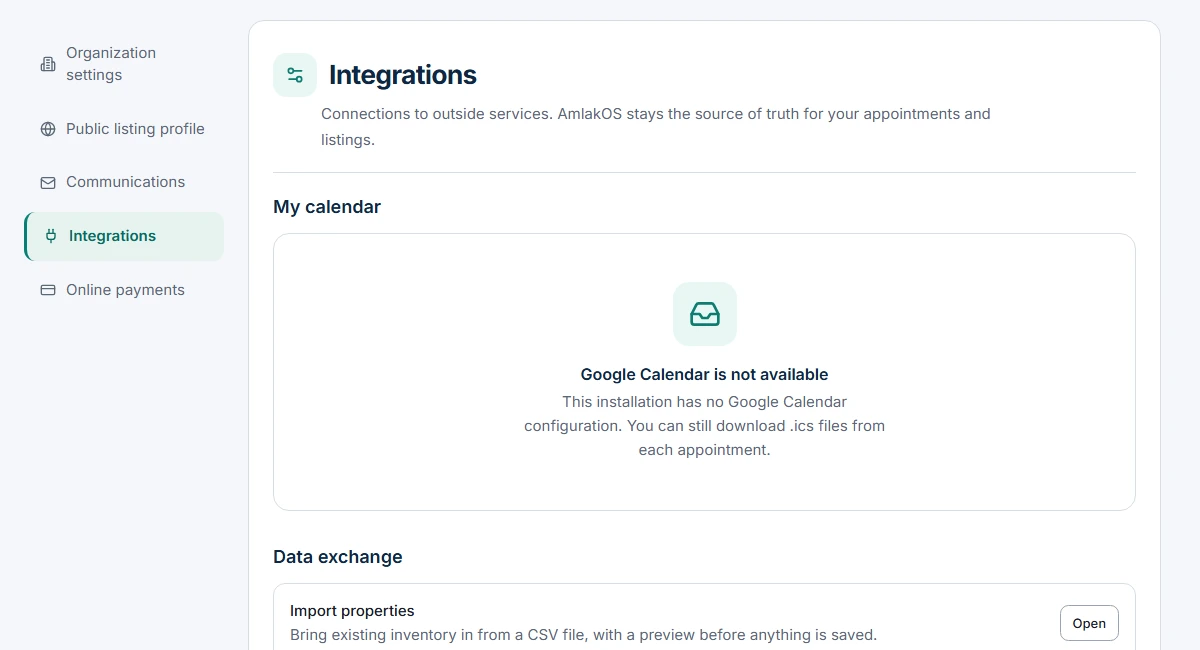
Open the integration settings before promising calendar synchronisation. This installation explicitly identifies missing Google Calendar configuration and offers other data-exchange paths; each needs to be evaluated on its own terms.
 View the full-size screen ↗
Downloading an appointment file is not bidirectional calendar synchronisation. A listing appearing in a feed is not proof of partner publication. An online-payment option is not proof of a verified live transaction. Each integration needs its own credentials, field mappings, failures and acceptance evidence.
The project includes capabilities for PayTabs, Google Calendar, WhatsApp and SMS, but live account behaviour was not verified here. Scope each connector explicitly, including what the local system continues to do when the outside service is unavailable.
What should a pilot prove?
- One rule matches the correct record and recipient in the intended language.
- A changed or settled obligation is handled according to the agreed rule.
- A failed delivery is visible and assigned for follow-up.
- A repeated event does not create unexplained duplicate work.
- Provider outcomes are reconciled with the local communication record.
Begin with one high-value reminder, such as an upcoming installment, and test its exceptions before adding more channels. This gives the team a dependable process rather than a larger number of unverified notifications.
Continue with the workflow you need
- Property management software: what should it connect?
- Real estate CRM: from enquiry and viewing to contract
- Rent collection software: dues, receipts and allocation
- Property maintenance: from request to visit outcome
- Owner and tenant portals: access without exposing everything
How this walkthrough was prepared
We reviewed the AmlakOS implementation and opened its local demo on November 4, 2026. Screens show actual interfaces with synthetic fixtures, cropped to the relevant area without changing their content. Interface states alone do not establish customer outcomes or successful external delivery.
More perspectives