
Two people registered for a course does not mean two people completed it. Similarly, two completed support reviews do not prove a programme's long-term impact. An institutional system should give each operational count a clear definition and a path to the records behind it.
We use actual Arabic screens from the Hayat Fund presentation version. Students, dates and course information are synthetic. The walkthrough covers administration and reporting, not evidence that the programme produced a measured educational outcome.
Keep course configuration separate from participant status
A course needs dates, hours, capacity and registration rules. Each participant then has an individual state. The demo course below has two registrants: one accepted and one under review. Neither status should automatically be presented as completion.
 View the full-size screen ↗
Before opening registration, agree capacity, deadlines, cancellation and any payment-related conditions. Test a full course and a late registration. Make the explanation useful to the applicant rather than showing only a disabled button.
Treat exams as their own controlled activity
The project includes exam administration and student exam-taking with eligibility, timing, complete-answer and attempt controls. These are separate from the list of registered course participants. Being enrolled does not by itself prove exam eligibility, a submitted attempt or a passing result.
If certificates, attendance imports or a learning platform connection are required, specify those outputs explicitly and verify them. Do not infer a complete learning-management integration from the existence of a course and exam menu.
Read the report definition before interpreting its chart
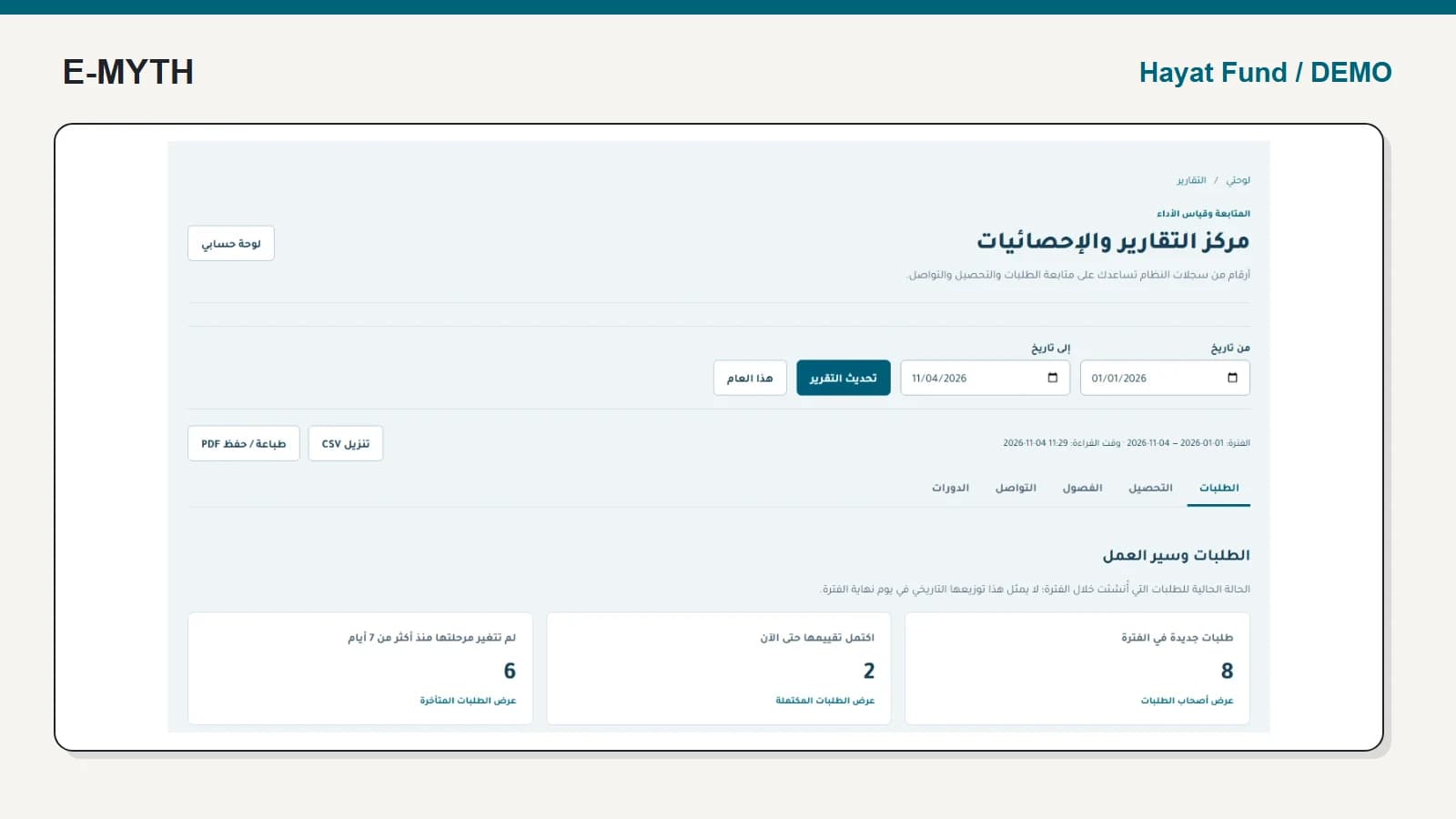
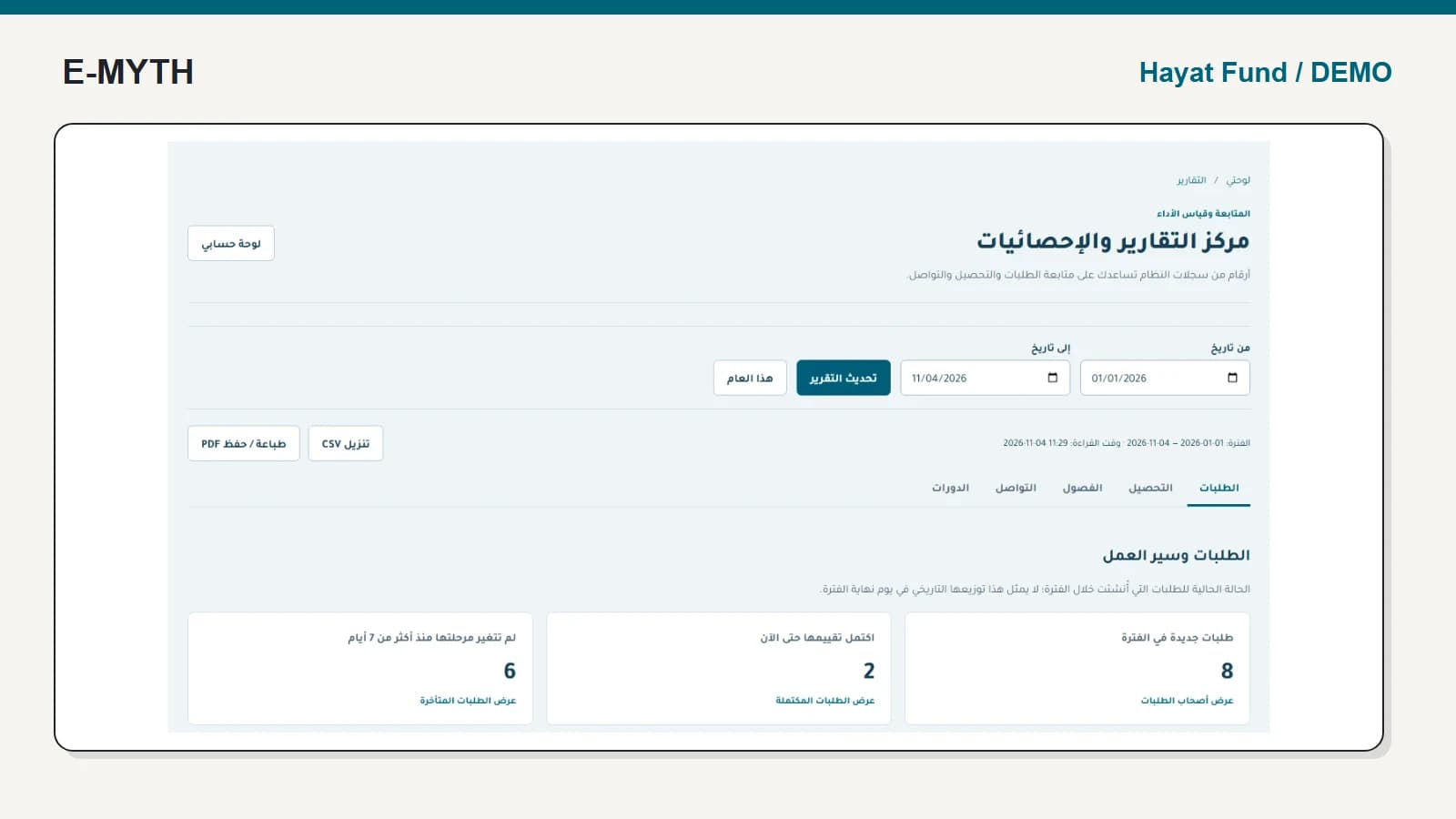
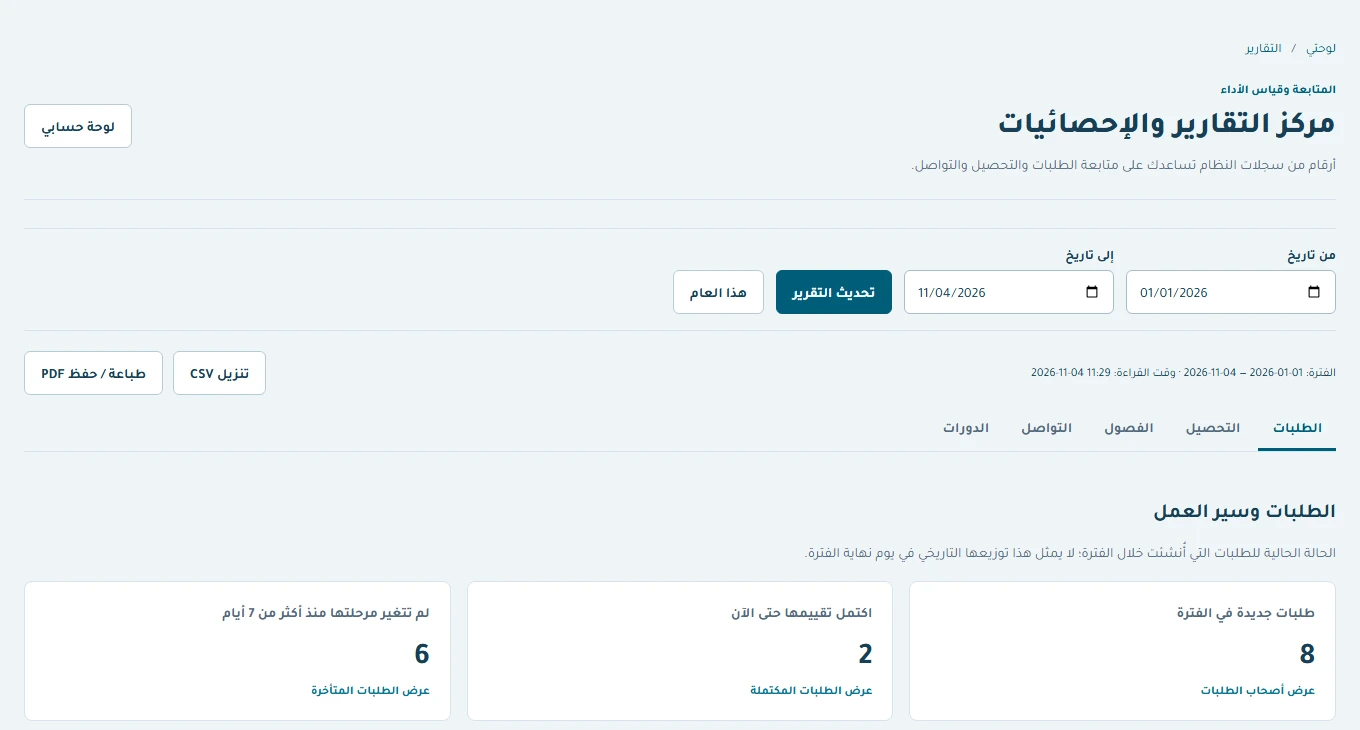
The application report explains that it displays current states of applications created within the selected period. That is different from reconstructing their historical states on the final day of that period. The wording changes what a manager can reasonably conclude.
 View the full-size screen ↗
For example, a file created in June may have reached its current state later. A present-state distribution answers “where are those files now?” It does not necessarily answer “where were they on June 30?” Request a historical snapshot feature separately if that is the required analysis.
Make drill-down and export preserve context
A useful number opens the relevant records with the same filters. The report area includes applications, collections, semesters, communication and courses, with table views, export and print options. Check that a filtered count and its exported population agree.
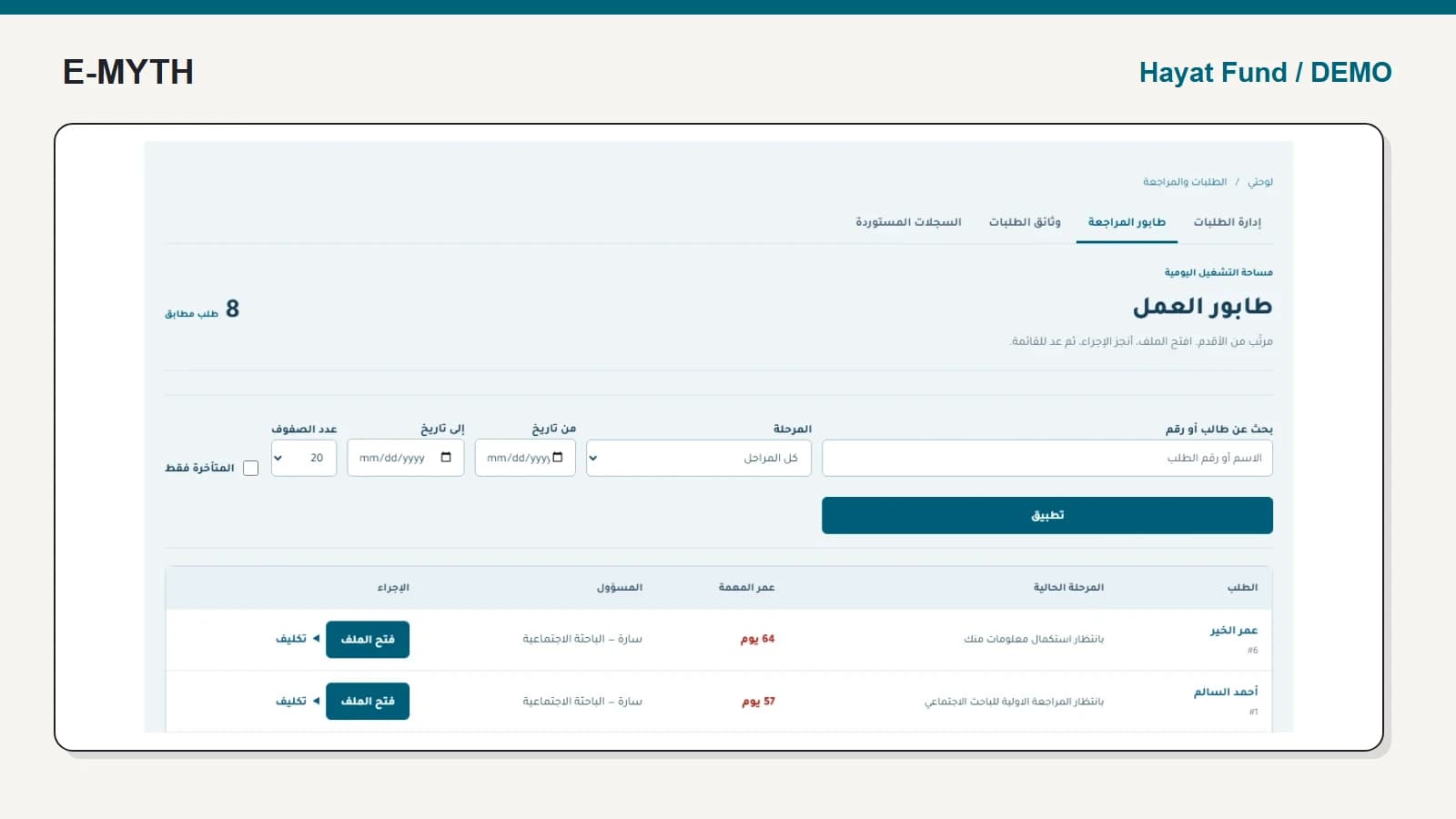
Pair application-stage reports with responsible staff and next actions. Pair fundraising reports with receipt definitions. Different report subjects should not inherit one vague meaning of “completed.”
Give management visibility without operational editing
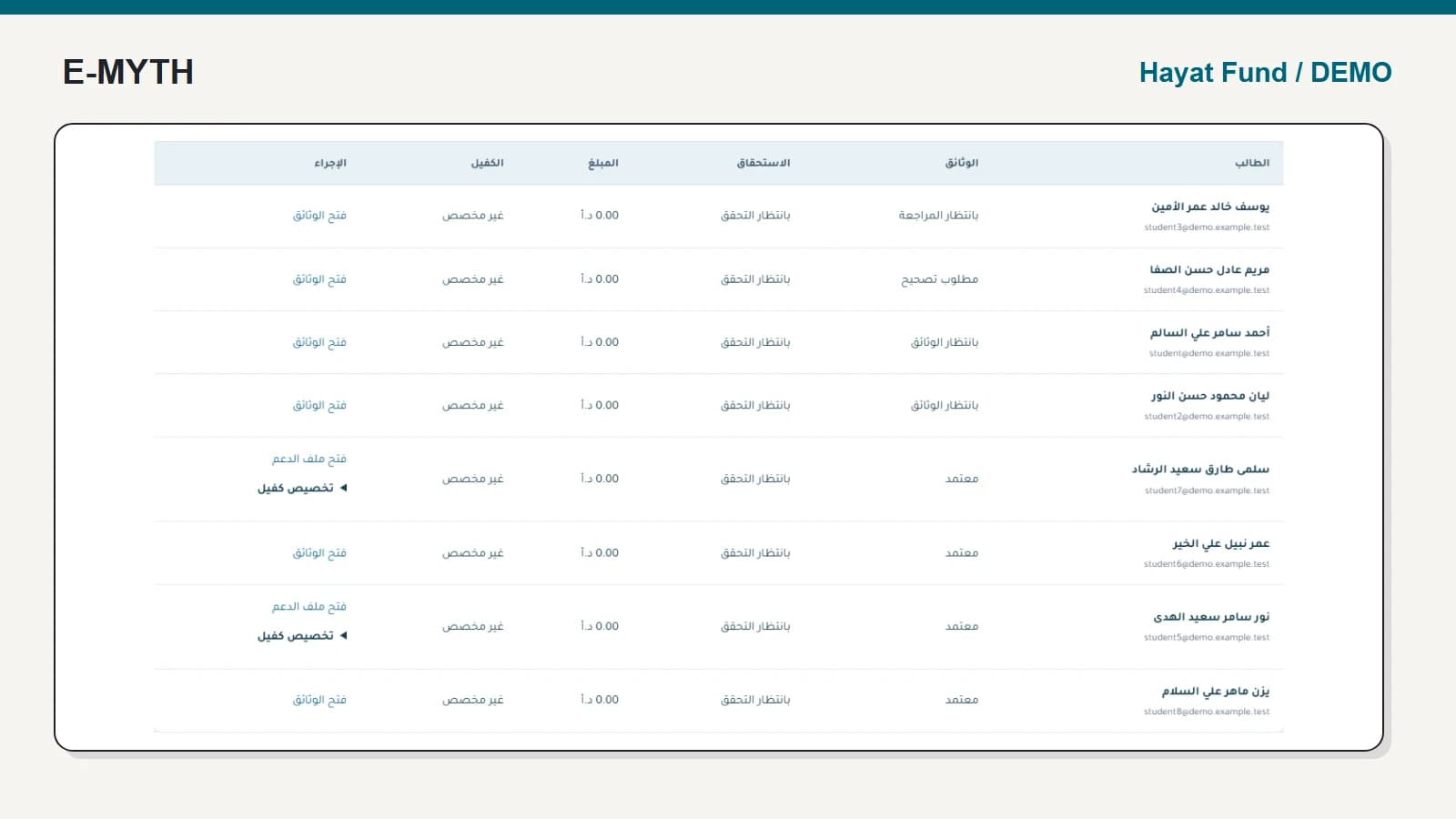
A board reader may need summaries and record inspection without permission to alter support decisions. Staff who manage course participants have another set of tasks. Use role-specific accounts in acceptance and test direct links, not only the navigation each role sees.
Data imported from earlier systems should retain provenance. Do not fill missing historical decisions or documents with invented values to make reports look complete. Mark limitations and agree how incomplete records affect the selected metrics.
What should a reporting review include?
Choose one course, one incomplete application and one received contribution. Define the intended metric, select a period, inspect the underlying records and export the same population. Then repeat as a read-only manager. If every number can be explained and every edit has the correct owner, the institution has a stronger reporting foundation than a dashboard filled with unexplained totals.
Continue with the workflow you need
- Scholarship management software: beyond the application form
- Support applications: reviews, missing information and decisions
- Semester support: documents, eligibility, approval and payment
- Donation management: pledges, collections and memberships
- Beneficiary communications: responses, reminders and delegation
How this walkthrough was prepared
We reviewed the Hayat Fund implementation and opened its local demo on November 4, 2026. Screens show actual interfaces with synthetic fixtures, cropped to the relevant area without changing their content. Interface states alone do not establish customer outcomes or successful external delivery.
More perspectives